In January of this year,
the SBE announced that Executive Director John Poray would retire at
the end of 2020. John has been the society’s executive director for 28
years. In March, the process began to find a candidate to fill the
position. (That process is detailed below.)

After receiving and
reviewing multiple applications, the field was narrowed to three
people. From those three, one was recommended to the SBE Board of
Directors, which was reviewed at a board meeting held on Sept. 22. The
Board approved the appointment of James Ragsdale of Anderson, IN. Mr.
Ragsdale will officially begin work on Jan. 1, 2021.
Most recently, Ragsdale was
the VP for finance at Anderson University. Ragsdale also completed his
undergraduate degree at Anderson. In that role, he managed the
operational budget for the private, liberal arts education institution,
participated as member of the university president’s leadership team,
and oversaw the business office, human resources, physical plant,
police and security, and auxiliary services.
Before his position with
Anderson University, he was the senior financial analyst at Ascension
Technologies, where he managed the operational and capital budgets for
Indiana Market and St. Vincent Health system. Other career work
includes treasurer and controller at Church of God Ministries and
practice administrator at Anderson Family Practice Associates.
Ragsdale earned his
bachelor of arts in business management and public affairs at (then)
Anderson College, and his masters of business administration in finance
from Indiana University.
On the announcement, SBE
President Wayne Pecena said, “Following all the extensive work by many
people to arrive at the final selection of Jim Ragsdale to be the SBE’s
new executive director, I welcome Jim and look forward to working with
him to continue furthering the goals of the SBE and providing superior
services to our members. I also want to thank SBE Past President Joe
Snelson for his work leading the Executive Director Search Committee,
and all the efforts of the EDSC and the Executive Director Search
Advisory Group members.”
The Selection and
Review Process
In March of this year, SBE President Wayne Pecena proposed to the board
that a five-person Executive Director Search Committee (EDSC) be formed
with the goal of seeking out qualified candidates for the position and
presenting a finalist to the board for approval. The tasks of the
committee included writing a job description, establishing
qualifications, proposing a fair compensation package, posting of the
position, interviewing candidates and presenting a finalist to the
board for approval.
To provide additional input
to the EDSC, President Pecena formed an Executive Director Search
Advisory Group to seek input on what should be expected from the SBE
executive director in terms of duties and responsibilities, and the
qualifications required to meet those objectives. This group of about
20 people consisted of SBE members and headquarters staff. Their input
was used by the EDSC to finalize the job description of the executive
director.
A field of 28 candidates
was narrowed to three finalists, who were all interviewed in person by
the committee. The Committee unanimously chose one finalist, James
Ragsdale, to recommend to the Board.
SBE Short Circuits
by
John Poray
SBE Presents John H.
Battison Award
for Lifetme Achievement to
Mark Persons
September 25, 2020
The Society of Broadcast
Engineers presented its Membership Meeting & Awards Presentation
(MMAP) webcast on Sept. 23. The program, held online after the
in-person events had to be cancelled because of COVID-19, combined the
SBE’s annual Membership Meeting and Awards Banquet presentations into
one online event.
In addition to the
previously announced awards, including the Robert W. Flanders SBE
Engineer of the Year award to RJ Russell, CPBE, of Middletown, DE, and
the 2020 James C. Wulliman SBE Educator of the Year awards to Fred
Baumgartner, CPBE, CBNT, of Elizabeth, CO, and Roland Robinson, CBTE,
CBNT, CTO, of Tacoma, WA, the event also recognized other individual
and chapter efforts, as well as the two newest SBE Fellows, Ralph
Beaver, CBT, and Jim Leifer, CPBE.
The MMAP also added a
special surprise event. The SBE John H. Battison Award for Lifetime
Achievement recognizes and pays tribute to individuals for their
dedication, lifelong achievement and outstanding contribution to
broadcast engineering. Nominees are SBE members in good standing and
have been active for 40 years or more in the broadcast engineering
industry or a closely allied field that benefits broadcast engineering.
Nominations can be made by any member of the SBE and will include the
endorsement of three other SBE members. There is no more than one
recipient per calendar year. The recipient for 2020 is Mark Persons,
CPBE, AMD, CBNT.
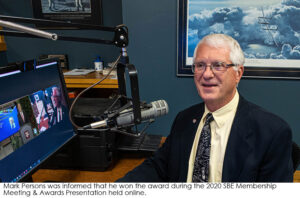
Mark, a life-long resident of Minnesota, followed in the
footstep of his father, who was also a radio broadcast engineer. Mark
started turning transmitter knobs more than 60 years ago.
While reaching the rank of sergeant in the United States
Army from 1967 to 1969, Mark was in charge of an avionics repair shop
for the OV-1 Mohawk high-tech surveillance aircraft in Vietnam. After
his military service, he spent the next ten years with KVBR radio in
Brainerd, MN, where he became chief engineer. In 1977, he opened his
own radio engineering consulting business, which he operated for the
next 40 years. He married his wife Paula in 1978, and she became
instrumental in running the business side of the business out of their
home.
Mark has been a respected engineer in Minnesota and the
upper Midwest his entire career. He built 12 commercial AM and FM radio
stations, and rebuilt, upgraded, maintained and repaired countless
other radio stations for clients. He has endeavored to share his
knowledge and experience with others in the field. He has written more
than 140 articles that have appeared in industry magazines and made
more than 25 speeches and presentations at industry conventions,
conferences and meetings.
Mark joined the SBE in 1981, and is now a life member.
He holds three life certifications from the SBE. Outside of his
broadcasting career, Mark is a member of the American Legion, The VFW
and Disabled American Veterans. He enjoys amateur radio as WØMH, and
photography.
Retired several years ago, he and Paula are mentoring younger broadcast
engineers through the SBE Mentor Program. Mentoring is his way of
giving back to the industry that kept him employed for more than 50
years.
On receiving the honor during the webcast, Mark said,
“This really was a lifetime experience for me. I never had a plan B. I
was always going to be a broadcast engineer, and that’s exactly how it
came out. I want to continue to contribute to the Society of Broadcast
Engineers. Thank you.”
Ennes Educational Foundation Trust Announces
Five Scholarship Recipients
August 28, 2020
The Ennes Educational Foundation Trust™ has awarded five scholarships
for 2020. The recipients were chosen from applications received by July
1, 2020, from the previous 12 months.
The Harold E. Ennes Scholarship, Robert D. Greenberg Scholarship, John
H. Battison Founder's Scholarship and newly created Gino Ricciardelli
Scholarship are awarded to individuals interested in continuing or
beginning their education in broadcast engineering and technology. The
Youth Scholarship is specifically for a graduating high school senior
interested in broadcast engineering as a career. Each scholarship
awarded this year is for $2,500.

This year the Harold E. Ennes
Scholarship recipient is
Chris Gamelin of Middletown, CT. He
says he knew he wanted to be involved with broadcasting since he was
very young, whether it was playing music via the internet or
broadcasting a basketball game at his school. His goals in broadcasting
continue to evolve as he feeds his hunger to learn. He credits John
Ramsey for teaching him the technical side, which is what Chris is
pursuing. His professional work began with an internship at WQUN-AM.
Since then, he has worked for iHeartRadio and Entercom Communications,
and is now a maintenance technician for WFSB-TV.

Receiving the Robert D. Greenberg
Scholarship is
Jon Sanelli of Albertson, NY. Jon loves
everything about broadcasting, and more specifically how it all works
technically. He has worked on the engineering and production side in
the New York City market at WRHU Radio Hofstra University, in addition
to broadcast facilities in the five boroughs and the Tri-state. Jon
knows that broadcasting needs technology, but more importantly, it is
people that make the industry shine.
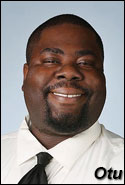
The John
H. Battison SBE Founder's Scholarship has been awarded to
Ismail Otu,
CRO, CTO, originally from the Bronx, but now living in Charlotte, NC.
He graduated from The Broadcasting Production Technology Program at
Central Piedmont Community College (CPCC) in Charlotte. He served on
Phi Theta Kappa International Honor Society's Vice President Committee,
interned at WTVI PBS Charlotte, and earned the Most Outstanding Student
Award at the Student Excellence Convocation on behalf of the CPCC's
broadcasting program. Ismail plays several critical roles during live
events and concerts for CPCC's performing arts and events facilities
including sound board operator and stage/audio technician. While having
extensive experience working as an audio engineer, he is devoted to
becoming well-versed in other technical areas. Enthusiasm for audio
fuels Ismail's IT skill development focusing on networking
technologies. He plans to attend The Cleveland Institute of Electronics
and major in Broadcast
Engineering/Wireless Communication Electronics to pursue a career in
broadcast operations.
 The Gino Ricciardelli
Scholarship, created earlier this year in recognition of Gino
Ricciardelli, an SBE Charter, Life and Fellow member who died in 2018,
has been awarded to Sadie Levy of New York, NY. She currently
attends Northeastern University in Boston, where she is majoring in
electrical and computer engineering, with a focus on media production.
Sadie graduated from Fiorello H. LaGuardia High School of Music &
Art and Performing Arts, where she worked on various school productions
as a Digital Media Department Intern. Also, while in high school, Sadie
was awarded scholarships to study digital electronics in pre-college
programs at both The Cooper Union and New York University. Last summer,
Sadie completed a media internship in a New York City government
office, and this summer she is completing a media/design internship at
ATEM NYC. Sadie is looking forward to contributing to the field of
recording and new media.
The Gino Ricciardelli
Scholarship, created earlier this year in recognition of Gino
Ricciardelli, an SBE Charter, Life and Fellow member who died in 2018,
has been awarded to Sadie Levy of New York, NY. She currently
attends Northeastern University in Boston, where she is majoring in
electrical and computer engineering, with a focus on media production.
Sadie graduated from Fiorello H. LaGuardia High School of Music &
Art and Performing Arts, where she worked on various school productions
as a Digital Media Department Intern. Also, while in high school, Sadie
was awarded scholarships to study digital electronics in pre-college
programs at both The Cooper Union and New York University. Last summer,
Sadie completed a media internship in a New York City government
office, and this summer she is completing a media/design internship at
ATEM NYC. Sadie is looking forward to contributing to the field of
recording and new media.
 Isaiah Dickson of Brookhaven,
PA, received the Youth Scholarship. Isaiah is entering his freshman
year at Cabrini University. He will major in digital communication and
social media. His work has been recognized by the Population Media
Center and the Scholastic Art and Writing Awards. He has been a part of
the creation of a short film titled Marvelon as well as being part of
the CollegeXpress student vlogger program. In his spare time he enjoys
filming and editing his own videos, writing poetry, writing music, and
live streaming.
Isaiah Dickson of Brookhaven,
PA, received the Youth Scholarship. Isaiah is entering his freshman
year at Cabrini University. He will major in digital communication and
social media. His work has been recognized by the Population Media
Center and the Scholastic Art and Writing Awards. He has been a part of
the creation of a short film titled Marvelon as well as being part of
the CollegeXpress student vlogger program. In his spare time he enjoys
filming and editing his own videos, writing poetry, writing music, and
live streaming.
SBE President Wayne Pecena,
CPBE, 8-VSB, AMD, DRB, CBNE, said, "The SBE has an ongoing focus on
education, and the Ennes Scholarships are yet another piece of the
overall education effort. We look forward to seeing the great progress
of these five budding engineers as they further their education goals
with the assistance of the Ennes Educational Foundation Trust."
SBE Asks FCC to Extend C-Band Lump-Sum
Reimbursement Filing Deadline
August 19, 2020 (Updated
August 21, 2020)
The Society of Broadcast Engineers on Aug. 17, 2020,
filed a Motion for Extension of Time to Submit Lump-Sum Cost
Reimbursement Payment Elections for C-Band Earth Station owners through
Sept. 30, 2020. The current reimbursement submission deadline is Aug.
31, 2020.
C-Band Earth Station owners who registered their
antennas and are eligible for cost reimbursement for the C-Band repack
had the option to submit actual costs for reimbursement or apply for a
lump-sum reimbursement as was published in Public Notice DA 20-802,
released on July 30, 2020. That notice specifies a date of Aug. 31,
2020, for the lump-sum reimbursement election must be made and
effectuated. The SBE suggests that this is an insufficient time period
for broadcasters and broadcast engineers to satisfy the requirements of
the Public Notice, and that an additional period of 30 days is required.
The Commission allocated the 3.7-4.0 GHz segment for
auctionable 5G spectrum, and is holding the auction in December of this
year. The Report and Order held that C-Band Earth stations in the fixed
satellite service (FSS) would be relegated to the 200 MHz at 4.0-4.2
GHz, necessitating a repack of incumbent FSS Earth Stations operating
in that spectrum. The Report and Order held that new 5G commercial
mobile licensees will reimburse the reasonable relocation costs of
eligible, incumbent FSS Space Station operators, incumbent FSS Earth
Station operators, and incumbent Fixed Service licensees to move out of
3.7-4.0 GHz and into the 4.0-4.2 GHz segment. Through the FCC Wireless
Bureau, FSS Earth Station operators are to be reimbursed for reasonable
transition costs (through a published Cost Catalog) by the 5G auction
winners.
While the Report and Order was released March 3, 2020,
neither the Public Notice announcing the process, nor the Cost Catalog,
was released until July 30, 2020, almost four months later. Because the
Public Notice specified 30 days for a large number of broadcasters and
broadcast engineers to evaluate, prepare and submit their election for
lump sum payments, and during the COVID-19 pandemic, which has kept
many from their workplaces, the SBE made the motion for the filing
extension.
With the spectrum auction scheduled for December 3,
2020, and the relocation not scheduled until December 5, 2021, the
additional 30 days for stations to file will not affect the repack
process.
On August 20, 2020, the FCC
issued an Order (DA-20-9091A) that extends the filing time to Sept. 14.
From the order:
In this Order, the Wireless Telecommunications
Bureau (Bureau) partially grants a request filed by the Society of
Broadcast Engineers (SBE) seeking an extension of time for incumbent
earth station operators to elect the lump sum reimbursement described
in the Final Cost Catalog Public Notice. The Bureau, acting on
delegated authority, waives the deadline established by section
27.1419 of the Commission’s rules to the extent necessary to extend the
lump sum election deadline to September 14, 2020.
SBE Re-Elects Wayne Pecena as President
August 20, 2020
 The Society of
Broadcast Engineers, the association for broadcast and multimedia
technology professionals, announces the results of the 2020 election
for the national board of directors. Wayne Pecena, CPBE, 8-VSB, AMD,
DRB, CBNE, was re-elected as the society's president. Pecena is the
associate director of educational broadcast services at Texas A&M
University who operates public broadcast stations KAMU FM & TV. He
is a member of SBE Chapter 99 in College Station, TX.
The Society of
Broadcast Engineers, the association for broadcast and multimedia
technology professionals, announces the results of the 2020 election
for the national board of directors. Wayne Pecena, CPBE, 8-VSB, AMD,
DRB, CBNE, was re-elected as the society's president. Pecena is the
associate director of educational broadcast services at Texas A&M
University who operates public broadcast stations KAMU FM & TV. He
is a member of SBE Chapter 99 in College Station, TX.
Regarding the election, President Pecena said, “I look
to my second term as our industry and our personal lives have
experienced change and challenge like never before. I want to ensure
the Society brings a sense of normalcy to our members. This uniformity
is accomplished through our professional development continuing
education, certification and frequency coordination programs, while
making the right decisions for change in the future to insure continued
value to our members.”
Others serving one-year terms as officers, which begin on Sept. 23,
are:
• Vice President: Andrea
Cummis, CBT, CTO; Chapter 15 New York; Roseland, NJ
• Secretary: Kevin Trueblood, CBRE, CBNT; Chapter 90 Southwest FL; Ft.
Myers, FL
• Treasurer: Ted Hand, CPBE, 8-VSB, AMD, DRB; Chapter 45 Charlotte;
Charlotte, NC


Serving two-year terms on
the board of directors, which also begin Sept. 23 are:
• Stephen Brown, CPBE, CBNT;
Chapter 80 Fox Valley; Appleton, WI
• Roswell Clark, CPBE, CBNT; Chapter 39 Tampa Bay Area; Clearwater, FL
• Kirk Harnack, CBRE, CBNE; Chapter 103 Nashville; Nashville, TN
• Thomas McGinley, CPBE, AMD, CBNT; Chapter 16 Seattle; Missoula, MT
• Shane Toven, CBRE, CBNT; Chapter 43 Sacramento; Antelope, CA
• Fred Willard, CPBE, 8-VSB, CBNT; Chapter 37 District of Columbia;
Washington, DC
The national board of directors of the SBE is
responsible for the development of policy and determines the programs
and services the society provides to its more than 5,000 members. Those
elected will begin their terms on Sept. 23, 2020, during the SBE
Membership Meeting and Awards Presentation. They will join the other
six directors who have another year remaining in their terms:
• Mark Fehlig, PE, CPBE, 8-VSB; Chapter 40 San Francisco; Walnut Creek,
CA
• Charles “Ched” Keiler, CPBE, 8-VSB, CBNE; Chapter 53 South Florida;
Ft. Lauderdale;
• Geary Morrill, CPBE, CBNE; Chapter 91 Central Michigan; Saginaw, MI
• Jason Ornellas, CBRE, CRO; Chapter 43 Sacramento; Sacramento, CA
• Chris Tarr, CSRE, AMD, DRB, CBNE; Chapter 28 Milwaukee, WI
• Dan Whealy, CBTE; Chapter 96 Rockford; Waterloo, IA
Jim Leifer, CPBE, of Andover, MA, continues as immediate
past president.
The SBE National Meeting and
Awards Presentation webcast will be held Sept. 23, 2020 at 7 p.m. ET/4
p.m. PT. The event is being held online in 2020 because of the ongoing
pandemic.
RJ Russell, Fred Baumgartner and Roland Robinson
Receive SBE’s 2020 Top Individual Award Honors
August 4, 2020
The winner of the Robert W. Flanders SBE Engineer of the
Year award for 2020 is RJ Russell, CPBE, of Middletown, DE. The award
is presented to a member who has excelled in his or her career while
furthering the mission of the SBE. Candidates are nominated by their
peers. The 2020 James C. Wulliman SBE Educator of the Year award has
been awarded to two recipients: Fred Baumgartner, CPBE, CBNT, of
Elizabeth, CO, and Roland Robinson, CBTE, CBNT, CTO, of Tacoma, WA. The
award recognizes outstanding service and excellence in sharing
knowledge through teaching other broadcast engineers.
 Robert “RJ” Russell has been
an SBE member for 21 years. During that time, he has served as
director, treasurer, and vice president on the National Board of
Directors as well as serving on several national committees. RJ also
has held officer positions in various local chapters. He served proudly
in the United States Marine Corps as a cryptography technician. After
service in the military, he worked for several stations, including
those owned by Media General, Sinclair, Cordillera, Catamount, Sunbelt,
Univision, E.W. Scripps, and Fox.
Robert “RJ” Russell has been
an SBE member for 21 years. During that time, he has served as
director, treasurer, and vice president on the National Board of
Directors as well as serving on several national committees. RJ also
has held officer positions in various local chapters. He served proudly
in the United States Marine Corps as a cryptography technician. After
service in the military, he worked for several stations, including
those owned by Media General, Sinclair, Cordillera, Catamount, Sunbelt,
Univision, E.W. Scripps, and Fox.
RJ worked as a broadcast engineering manager on the
Sprint Nextel Project from 2004-2008, assisting many television
stations with the 2 GHz repack and reimbursement program. While
employed by Brigham Young University, RJ was instrumental in the design
and construction of a new 100,000 square foot BYU broadcast center and
associated transmission paths and signals. RJ has spent many countless
hours working on the ATSC 3 project station in Cleveland.
Most recently, RJ accepted the critically important
position of SBE frequency coordination manager as an independent
contractor through his company, TBSI. RJ has a vast and unique
knowledge of the frequency coordination process and is the SBE's major
representative to the Department of Defense and its contractors in the
SBE-DOD-NAB transition process at 2 GHz. Through the direct involvement
of RJ, who is respected very highly by the DOD, FCC and NTIA, the SBE
and its members, broadcast licensees, and the DOD have benefited from
the careful, meticulous planning that RJ has worked exceptionally hard
on to maximize DOD-coordinated use of 2 GHz without constraint on
broadcasters. RJ is presently overseeing preparation of a national
database of 2 GHz users that will facilitate the work of SBE frequency
coordinators, and he has revitalized the program at a difficult time in
the history of volunteer frequency coordination.
 Fred Baumgartner has been an
SBE member for 47 years and has given countless hours to furthering the
education of today’s broadcast engineers through his work with the
Ennes Educational Foundation Trust for 17 years, he spearheaded the
annual Ennes Workshop during the NAB Show, and recently produced the
SBE presentation on NextGen TV during the 2019 PBS TechCon. One nominee
said of Baumgartner, “He was supportive of my goals re: SBE and helped
get me in touch with others in the organization to help me grow in my
involvement and education.”
Fred Baumgartner has been an
SBE member for 47 years and has given countless hours to furthering the
education of today’s broadcast engineers through his work with the
Ennes Educational Foundation Trust for 17 years, he spearheaded the
annual Ennes Workshop during the NAB Show, and recently produced the
SBE presentation on NextGen TV during the 2019 PBS TechCon. One nominee
said of Baumgartner, “He was supportive of my goals re: SBE and helped
get me in touch with others in the organization to help me grow in my
involvement and education.”
 Roland Robinson
 has been an SBE member for 24 years. He is an instructor
of classes in broadcasting and video production at Bates Technical
College in Tacoma, WA. Robinson has taught at Bates for more than ten
years implementing an SBE-approved certification curriculum in his
broadcast classes. The curriculum was recently renewed unanimously by
the SBE National Certification Committee, the members being impressed by
the curriculum presented by Robinson. Robinson also serves on the
Washington State Emergency Communications Committee (SECC) and provides a
valued service to Washington State broadcasters by creating and
maintaining the complex Required Monthly Test (RMT) schedule.
The SBE 2020 Awards Program also recognizes other
achievements from SBE members, chapters and SBE sustaining member
companies.
MultiCAM Systems has won the SBE Technology Award for
the Air Bridge. Air Bridge is a new video solution for including remote
guests in shows or conferences. Up to four guests can be live at the
same time, and up to 12 guests can be on the waiting list. Users send a
link to the guests. Once that link is opened, the guest is connected to
the show with the host's permission.
Chapter and Individual Awards
Chapters are the lifeblood of the SBE, and 2020 marks the seventh year
that the Chapter Engineer of the Year Award has highlighted the
achievements of members within their chapters. This year, seven
chapters selected their own award recipients. Each winner will be
presented with a special plaque and be recognized nationally on the SBE
website and in a future issue of The Signal. The seven chapter winners
also were automatically nominated for the national Robert W. Flanders
SBE Engineer of the Year Award.
Chapter 37 in Washington, DC, has won the Best Educational Event for
the NextGEN TV Summit held Jan. 16, 2020. The event was held in
conjunction with SMPTE. Fred Willard, who helped produce the event
said, “We were amazed at the number of folks that traveled great
distances to attend this event. It was truly regional. Thomas Janner
from Rohde and Schwarz flew from Germany just to present.”
Statistical Awards
Percentage Growth of New Members:
Class A: 106 Florida Panhandle; Chapter Chair Mark Johnson, CSRE
Class B: 103 Nashville; Chapter Chair James Campbell, CPBE
Highest Percentage of Certified Members:
Class A: 115 Southern Idaho; Chapter Chair Thomas Kettwi, CBT
Class B: 131 Inland Empire; Chapter Chair James Alexander, CPBE, CBNT;
Certification Chair Paul Claxton, CPBE, CBNT
Highest Percentage of Member Attendance at Meetings:
Class A: 112 Western Wisconsin; Chapter Chair Todd Zschernitz, CBTE
Class B: 69 Alamo Area; Chapter Chair Christopher Anderson
All the winners will be recognized at the SBE Membership Meeting and
Awards Ceremony, held online on Sept. 23. Nominations for the 2021
awards will open in February.
Note: Class awards are determined using the median
chapter size as of Dec. 31, 2019, as the dividing line between Class A
(fewer than or equal to the median) and Class B (more than the median).
John Poray, SBE Executive
Director, to Retire at End of 2020
January
2, 2020
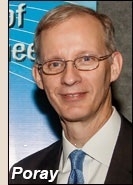
Wayne Pecena, president of the
Society of Broadcast Engineers, has announced that long-time executive
director of the SBE, John Poray, has shared his plans to retire at the
end of 2020. Poray joined the SBE as executive director on Oct. 1,
1992. During his tenure, the SBE has seen growth in membership, and in
the society’s certification, education and frequency coordination
programs.
 With the announcement, President Pecena added, "John has
been a fixture of the SBE since 1992 who cannot be replaced. We can
only seek to find a successor!"
With the announcement, President Pecena added, "John has
been a fixture of the SBE since 1992 who cannot be replaced. We can
only seek to find a successor!"
Poray's entire 43-year
career has been in the field of non-profit organization management.
Prior to the SBE, he served with the International Headquarters of
Kiwanis International, The Apartment Association of Indiana, The
Columbus (OH) Apartment Association, and began his career with the
Central Ohio Council, Boy Scouts of America. Poray was the first
full-time executive director hired by the SBE Board of Directors, led
at the time by SBE President Richard Farquhar.
With his announcement,
Poray said, "I have been blessed to have had a long and productive
relationship with the SBE, working with many great members, national
leaders and staff. Together, we have worked to grow the SBE in size and
stature and I believe the SBE is positioned well to continue to serve
the broadcast and media engineers into the future. I look forward to a
busy 2020 for SBE while assisting the Board of Directors with the
transition."
In the
coming weeks, President Pecena plans to meet with members of the Board
of Directors to begin the search process for the next SBE executive
director.
SBE Enhances MemberPlus Opportunity
October 28, 2019
On Jan. 2, 2018, the Society of Broadcast Engineers, the association
for broadcast and multimedia technology professionals, introduced the
SBE MemberPlus member benefit. The enhanced
member benefit allows Regular, Senior or Associate members to upgrade
their membership with full access to the more than 80 Webinars by SBE.
Response to the SBE MemberPlus program has been positive, and more than
1,000 members have added SBE MemberPlus to their regular membership.

At the Board of Directors meeting, held Oct. 15, 2019, in
Madison, WI, the program was further expanded to provide the member
benefit to SBE Life members and SBE Student members, who previously
could not participate in the program. Called SBE Life MemberPlus and
SBE Student MemberPlus, SBE members in these two categories will be
able to add the benefit to their membership beginning in January of
2020.
SBE MemberPlus has been
available to Regular, Senior or Associate members for the cost of
annual dues, plus $90; a total of $175. On Jan. 2, 2020, Life members
will be able to add SBE MemberPlus to their membership for $90. Student
members will be able to opt for SBE MemberPlus when they join or renew,
also for $90. Existing SBE Life and Student members can add the option
beginning Jan. 2 by contacting the SBE National Office by phone at
317-846-9000.
SBE President Wayne
Pecena, CPBE, 8-VSB, AMD, DRB, CBNE, commenting on the member benefit,
said, "The SBE educational efforts have grown significantly in recent
years, and SBE MemberPlus provides the greatest access to our leading
educational tool: Webinars by SBE. Providing access to Life and Student
members allows younger, as well as more experienced SBE members, to
continue learning by taking advantage of this popular benefit."
https://www.sbe.org/sections/WebinarsbySBE.php


